How to Market a Fixer-Upper: Visual Tips to Show Property Potential
Transforming 'As-Is' into 'Must-Have' through the power of strategic visual storytelling and digital renovation.
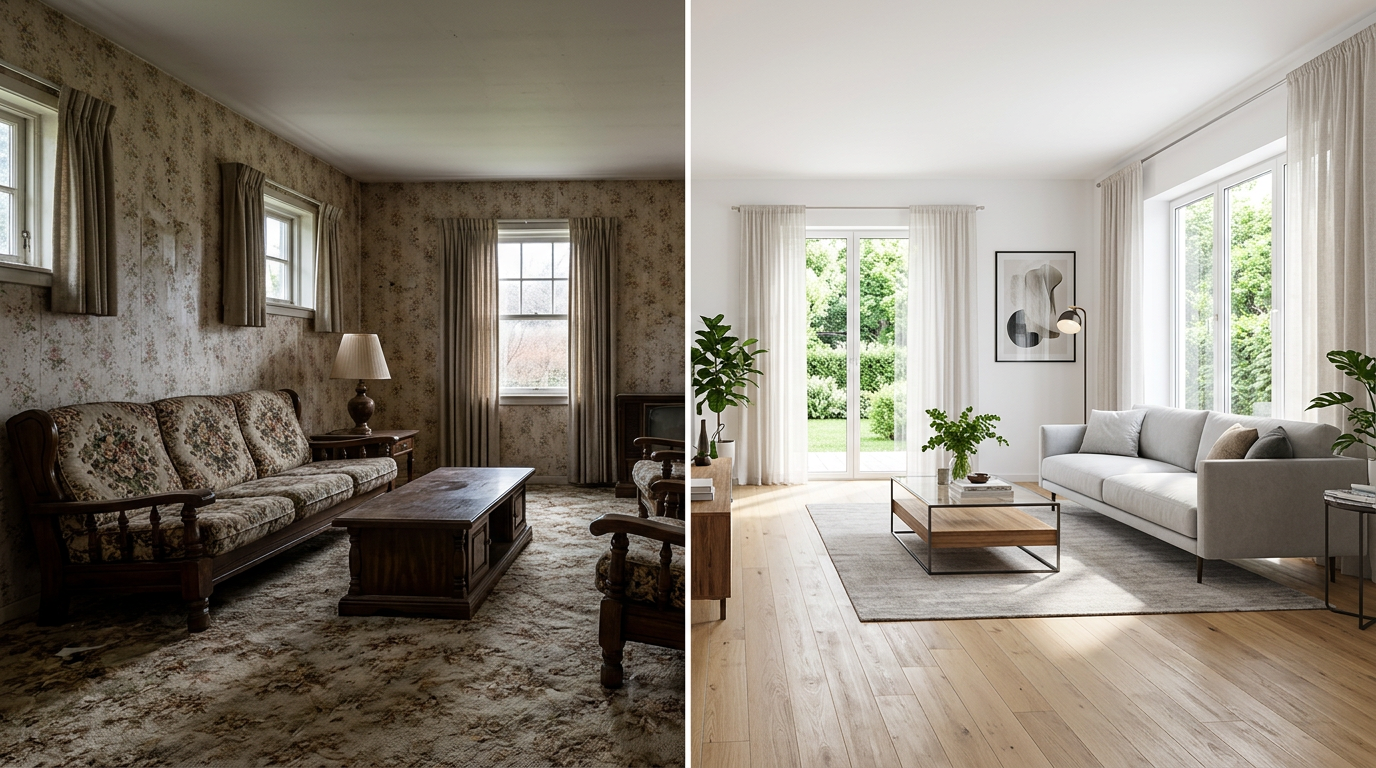
The Challenge: Selling the Dream in a Reality of Peeling Paint
We’ve all been there. You pull up to a new listing, and before you even kill the engine, you’re thinking, 'How on earth am I going to photograph this?' Maybe it’s an estate sale that hasn’t been touched since the Nixon administration, or perhaps it’s a 'distressed' property where the distress is visible from the curb. Your job isn't just to sell a house; it’s to sell the potential of what that house could be.
Marketing a fixer-upper requires a completely different mindset than selling a turnkey luxury condo. When a home is in rough shape, standard photography can actually work against you. If a buyer scrolls through Zillow and sees nothing but stained carpets and dated kitchens, they aren’t thinking about 'sweat equity'—they’re thinking about how much a dumpster rental costs. To successfully market a fixer-upper, you have to bridge the gap between current reality and future possibility.
1. Use Virtual Renovation to Bridge the Imagination Gap
Most buyers lack 'the eye.' They can't look at a cramped, dark kitchen and imagine a bright, open-concept chef’s space with quartz countertops. This is where virtual renovation becomes your best friend. Unlike standard virtual staging—which just adds furniture—virtual renovation actually changes the fixtures, flooring, and even walls in a photograph.
By showing a 'Before and After' slider on your property website, you give buyers a roadmap. You’re essentially saying, 'Don’t worry about the lime green linoleum; look at how this space handles natural light once the cabinets are white.' When considering your options, it's worth evaluating Virtual Staging vs. Physical Staging: Which Offers Better ROI? for these types of projects. For a fixer-upper, the digital route almost always wins on ROI because you can show a $50,000 renovation for the price of a few high-end renders.
The Psychology of the 'After' Image
When a buyer sees a beautiful render of a renovated room, their brain begins to anchor to that image. They start mentally placing their own furniture in the 'After' version. This emotional connection is what drives offers. Without the visual aid, they stay stuck in the 'Before'—which feels like a chore rather than an opportunity.
2. Clear the Path with Virtual Decluttering
Sometimes the problem isn’t that the house is falling apart; it’s just that the current owners have thirty years of 'stuff' packed into every corner. Clutter kills the sense of scale. A room filled with boxes and oversized furniture looks half its actual size. If the sellers aren't able to move everything out before the shoot, you don't have to settle for messy photos.
You can learn how to use virtual decluttering to sell messy listings to digitally remove the chaos. This allows the 'bones' of the house to shine. For a fixer-upper, showing the floor-to-ceiling height and the actual square footage is vital. Buyers looking for a project want to see the canvas, not the previous artist’s leftovers.
3. Leverage Professional Floor Plans to Show the 'Bones'
If the visuals are rough, the data must be solid. A fixer-upper buyer is often looking for specific structural opportunities: Can I knock down this wall? Is there room for an ensuite? Is the layout functional? Standard photos can be deceptive when it comes to layout, especially in cramped or oddly shaped older homes.
This is why you should always use professional floor plans to win more listing leads and close deals on distressed properties. A floor plan provides a 'top-down' clarity that photos can't match. It allows contractors and architects—often the people your buyers will be consulting—to see the potential immediately. It transforms a 'confusing house' into a 'calculated investment.'
4. Focus on 'The Big Three' Visual Wins
When marketing a fixer-upper, you don't need to highlight every corner. In fact, you shouldn't. Focus your visual marketing budget on the areas that offer the highest perceived value return:
- The Kitchen: This is the heart of the home and the biggest renovation hurdle. If you can show a stunning virtual renovation of the kitchen, you’ve won half the battle.
- The Primary Suite: Buyers want a sanctuary. Even if the current bedroom has wood paneling and shag carpet, a visual render of a modern suite can change the entire narrative.
- Curb Appeal: First impressions happen in the first three seconds. If the exterior looks like a haunted house, many buyers won't even click on the interior photos. Use digital landscaping to show what a mowed lawn and some fresh paint could do.
5. Use 'Visionary' Copywriting
Your property description should act as a tour guide for the photos. Instead of listing the defects, frame them as opportunities. Don't say 'needs new roof and windows.' Say, 'Perfect opportunity to customize your dream home with modern, energy-efficient upgrades.' Use the text to point readers toward the virtual renders and floor plans. You are selling a future, not a past.
6. Social Media Strategy: The 'Fixer-Upper' Narrative
Fixer-uppers are actually incredibly 'viral' content. People love a transformation story (just look at the success of HGTV). Use this to your advantage on Instagram and TikTok. Create 'Vision Boards' for the property. Post a photo of the current bathroom next to a mood board of trendy tiles and fixtures. Invite your followers to 'Vote on the layout' in the comments. This engagement keeps the listing at the top of the algorithm and reaches people who might not have been looking for a project but suddenly find themselves inspired by the vision you’ve created.
Summary: How to Successfully Market a Fixer-Upper
To recap, if you want to move a property that's seen better days, you must:
- Digitally Renovate: Show them the 'After' so they can tolerate the 'Before.'
- Declutter: Remove the physical noise to show the true square footage.
- Provide Floor Plans: Give the analytical buyers and contractors the data they need to say 'Yes.'
- Highlight Key Rooms: Focus your budget on the kitchen and primary suite.
- Tell a Story: Use your marketing copy and social media to sell the transformation journey.
Conclusion: Don't Just List It, Launch the Vision
Selling a fixer-upper doesn't have to be a race to the bottom on price. When you invest in high-quality visual marketing, you aren't just selling a house; you're selling a vision of what life could look like in that space. You're attracting a wider pool of buyers—not just the hardcore investors looking for a steal, but also the 'regular' families who are willing to put in the work if they can just see the potential.
Ready to transform your most challenging listing into your biggest success story? At The Listing Showcase, we specialize in the high-end visual tools that make properties move. From virtual staging to professional floor plans, we help you show the world what's possible. Let's get that fixer-upper sold.