How to Market Eco-Friendly Homes: Visual Tips for Sustainable Features
Master the art of selling green features with high-impact visual strategies that resonate with modern buyers.
The New Standard of Real Estate: Why Green is the New Gold
Imagine you're walking through a light-filled living room with a client. They aren't just looking at the floor plan or the granite countertops anymore. Instead, they’re asking about the R-value of the insulation, the age of the HVAC system, and whether those sleek windows are triple-paned. Does this sound familiar? If it doesn't yet, it will soon. The shift toward sustainable living isn't just a passing trend; it’s a fundamental change in how people choose their forever homes.
According to recent data from the National Association of Realtors (NAR), over half of agents and brokers report that consumers are interested in sustainability. For the modern buyer—especially Millennials and Gen Z—an eco-friendly home represents more than just a lower carbon footprint. It represents health, long-term financial stability through lower utility bills, and a sense of responsibility. But here’s the challenge: how do you photograph 'efficiency'? How do you create a compelling visual for 'better air quality' or 'geothermal heating'?
Marketing an eco-friendly home requires a different lens—literally. You’re not just selling a property; you’re selling a performance-based asset and a lifestyle. In this guide, we’ll dive deep into the visual strategies you need to make those sustainable features pop off the screen and into the hearts of buyers.
Visualizing the Invisible: How to Photograph Technical Efficiency
The biggest hurdle in learning how to market eco-friendly homes is that many of the best features are hidden behind drywall or tucked away in a utility closet. A standard wide-angle shot of a basement doesn't tell the story of a high-efficiency heat pump. To fix this, we need to move toward 'feature-focused' photography.
1. Don’t Hide the Mechanicals
In a standard listing, the water heater is the last thing you want to show. In a green home, that hybrid heat pump water heater is a star. Clean the area, ensure the lighting is bright, and take a professional shot that highlights the energy-star rating or the digital interface. It signals to the buyer that this home is built for the future.
2. The Power of the Detail Shot
Close-up shots are your best friend here. If the home has reclaimed wood flooring, don’t just take a photo of the whole room. Get a tight, textured shot that shows the grain and the history of the material. If the windows are high-performance, capture a shot of the seal or the discreet manufacturer’s logo that proves their efficiency. These small visual cues build a narrative of quality and intentionality.
Highlighting the Intersection of Tech and Sustainability
Eco-friendly and 'Smart' often go hand-in-hand. A home that manages its own energy consumption is a dream for the modern, tech-savvy buyer. When you're showcasing these features, you need to bridge the gap between hardware and software.
Think about the smart thermostat on the wall. A static photo of a plastic box is boring. However, a shot of that thermostat glowing with an 'Eco-Mode' leaf icon tells a story of savings. This is very similar to the strategies we discuss in our guide on How to Market a Smart Home: Highlighting Tech for Modern Buyers. You want to show the interface and the ease of use, making the complex technology feel approachable and beneficial.
Using Lifestyle Photography to Tell the Sustainability Story
Sustainability is as much about a feeling as it is about a set of features. It’s the feeling of a sun-drenched breakfast nook that stays warm in the winter because of passive solar design. It's the joy of picking fresh herbs from a drought-resistant garden.
This is where lifestyle photography becomes your secret weapon. Instead of just showing the kitchen, show a basket of local produce on the recycled glass countertop. Instead of just showing the backyard, capture the way the evening light hits the xeriscaped garden. By incorporating human elements or 'lived-in' styling, you help buyers visualize their own sustainable life in the space. For more on this, check out our deep dive into 7 Ways to Use Lifestyle Photography to Tell a Story.
The Drone Advantage: Capturing Energy Generation
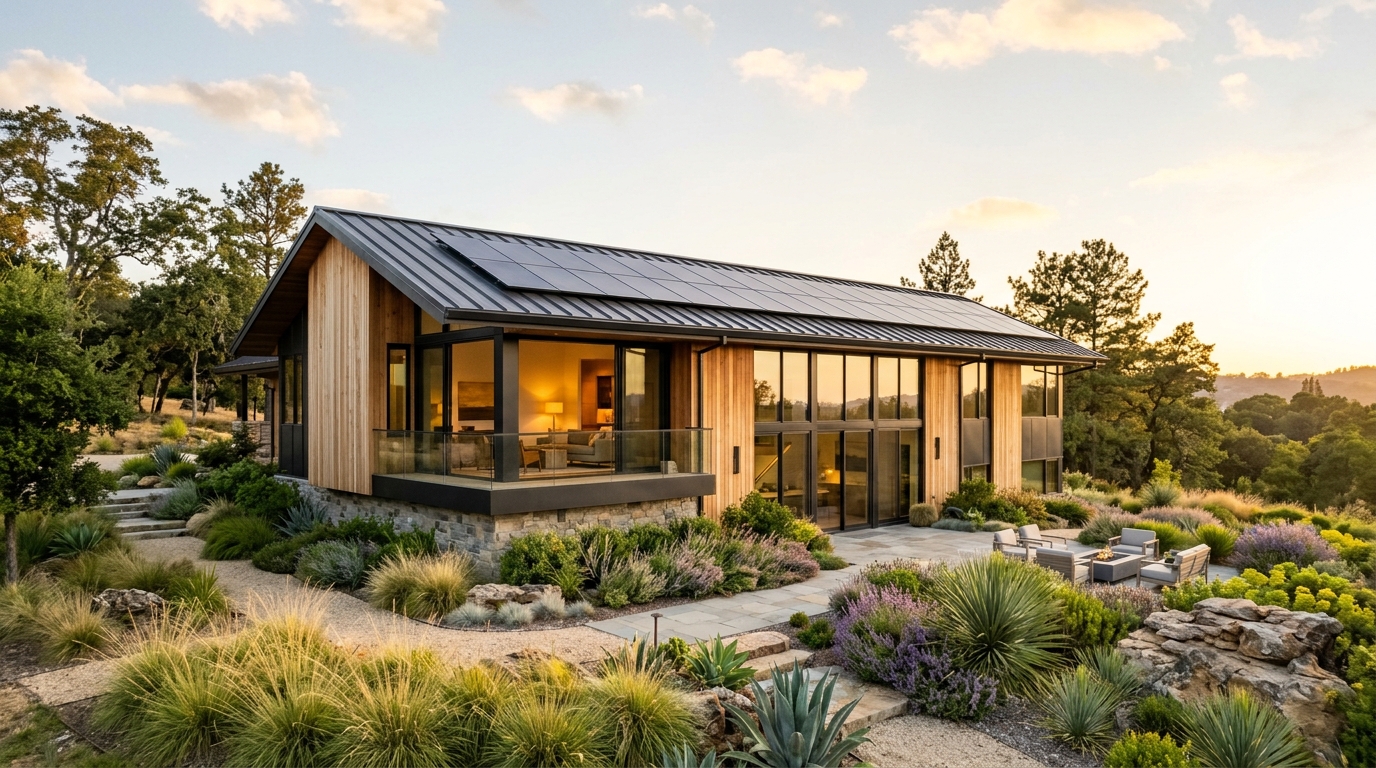
If a home has solar panels, you absolutely must show them, but the angle matters. A shot from the street often makes solar panels look like an afterthought or a bulky addition. However, an elevated drone shot can show the panels as a sleek, integrated part of the home’s energy ecosystem.
Use drone photography to show:
- The orientation of the house toward the sun (proving passive solar potential).
- The extent of the solar array on the roof.
- The proximity to green spaces or community gardens.
- The overall layout of the sustainable landscaping.
Seeing the home from above provides a sense of scale and demonstrates that the property is a self-sustaining unit within its environment.
Immersive Media: Allowing Buyers to 'Feel' the Efficiency
One of the hardest things to market is the 'tightness' of a home—how well it’s sealed and how quiet it is. While you can't record silence, you can use immersive tools to show the layout and the high-quality construction. When choosing between different media types, consider how they convey the flow of energy and air. We often weigh the pros and cons of different formats in our analysis of 3D Virtual Tours vs. Video Walkthroughs: Which Sells Homes Faster?
For a green home, a 3D tour is particularly effective because it allows you to add 'Mattertags' or hotspots. Imagine a buyer 'walking' through the virtual kitchen and clicking a tag on the induction cooktop that explains its energy efficiency and safety benefits. Or a tag on the floor-to-ceiling windows explaining the low-E coating. This turns a simple tour into an interactive educational experience.
The Sustainable Yard: Beyond Just a Green Lawn
In many parts of the country, a lush, green, water-hungry lawn is actually a deterrent to eco-conscious buyers. If your listing features xeriscaping, rain gardens, or native plantings, you need to market these as premium upgrades.
Xeriscaping and Native Plants
Focus on the colors and textures of native plants. These gardens are often more vibrant and attract more local wildlife (like butterflies and birds) than a standard lawn. Photographing these areas during the 'Golden Hour' can make a drought-resistant garden look like a high-end oasis.
Rainwater Harvesting and Composting
Don’t be afraid to show the rain barrels or the discrete, high-end composting system. To the right buyer, these aren't 'chores'—they are features that represent a self-sufficient lifestyle. Clean them up, stage them with some gardening tools, and make them look like part of a sophisticated hobby.
Copywriting for Green Homes: Matching Visuals with Words
While your visuals do the heavy lifting, your listing description needs to provide the data. Use 'The Three E’s': Energy, Environment, and Economics.
- Energy: Mention specific ratings (HERS Index, Energy Star, LEED).
- Environment: Highlight non-toxic materials, like low-VOC paints or wool carpeting, which appeal to health-conscious families.
- Economics: Whenever possible, provide data on average utility savings. 'Average monthly electric bill of $40' is a more powerful marketing statement than 'Energy efficient.'
A Practical Checklist for Your Next Eco-Friendly Listing
Before you send in the photographer, go through this checklist to ensure you aren't missing any 'hidden' value:
- Identify the Certifications: Is it LEED certified? Does it have a Pearl Certification? Make sure these logos are included in your marketing materials.
- Check the Lighting: Sustainable homes often rely on natural light. Schedule your shoot for when the sun is best positioned to highlight the home’s passive heating features.
- Highlight the Materials: Make a list of every sustainable material—bamboo, cork, recycled steel, reclaimed brick—and ensure there is a dedicated detail shot for each.
- Don't Forget the EV Charger: If there's a Level 2 charger in the garage, photograph it. It’s a massive selling point for the growing number of electric vehicle owners.
- Show the Air Quality: If there is an ERV (Energy Recovery Ventilator) or a high-end air filtration system, get a clean shot of the unit or the control panel.
Conclusion: Selling the Future, Today
Learning how to market eco-friendly homes is about more than just checking a box for 'energy efficiency.' It’s about understanding that for a growing segment of buyers, the home is a reflection of their values. By using professional photography, immersive 3D tours, and strategic lifestyle imagery, you aren't just selling a house—you’re selling a better way to live.
The agents who master this now will be the ones who dominate the market as sustainable building becomes the standard rather than the exception. Ready to elevate your next green listing? Start by focusing on the details that make the home not just a shelter, but a high-performance sanctuary.
Want to make your listings stand out in any market? Contact The Listing Showcase today to learn how our professional visual tools can highlight the unique value of your properties, from eco-friendly features to luxury amenities.