How to Market Listings to Remote Buyers With Immersive Visual Tools
Bridge the distance and build trust with tech-driven marketing strategies that sell homes sight-unseen.
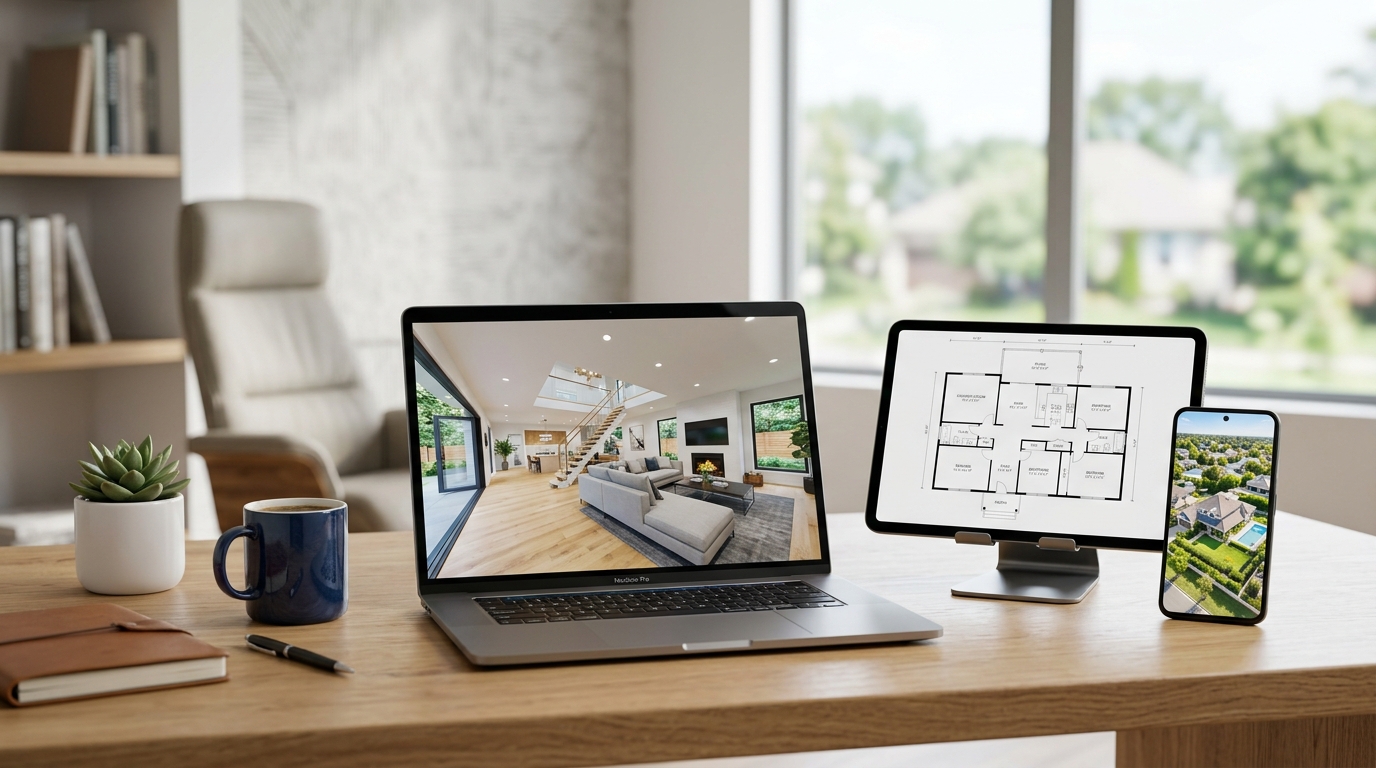
The Rise of the Sight-Unseen Sale
Imagine a buyer sitting in a coffee shop in Seattle, scrolling through listings in Charlotte. They aren't just browsing for fun; they’re relocating for a job and need a home in three weeks. They can't hop on a plane for every showing, so they’re looking for a reason to say "yes" from 2,000 miles away. If your listing only has ten grainy photos and a two-sentence description, they’re going to keep scrolling.
Marketing listings to remote buyers isn't just a niche skill anymore—it’s a core requirement for the modern agent. Whether it's an out-of-state investor, a military family, or a remote worker moving to a more affordable zip code, these buyers rely entirely on the digital environment you create. To capture their attention, you have to provide an experience that feels as close to a physical walkthrough as possible. You need immersive visual tools.
In this guide, we’re going to dive deep into how you can use high-end technology and strategic visuals to build the trust necessary for a remote buyer to sign a contract without ever stepping foot on the property.
1. 3D Virtual Tours: The Virtual Open House
If you’re still relying solely on static photos, you’re leaving money on the table. For a remote buyer, a 3D tour (like Matterport or Zillow 3D Home) is the single most important asset in your marketing kit. Why? Because it puts the buyer in the driver's seat. They can choose to linger in the kitchen, look at the ceiling height in the living room, or see exactly how the hallway connects the bedrooms.
When comparing 3D virtual tours vs. video walkthroughs, remember that while video is great for storytelling, 3D tours provide spatial context. A remote buyer needs to know the layout makes sense for their lifestyle. They want to know if they can see the TV from the kitchen island or if the nursery is close enough to the primary suite. A 3D tour answers these questions without you having to say a word.
Pro Tip for 3D Tours:
- Don't skip the "boring" spaces: Include the laundry room, the garage, and large walk-in closets. Remote buyers are often more concerned about storage and utility than local buyers who can see it for themselves later.
- Check your lighting: Just like with photography, 3D scans look better when every light in the house is on and the blinds are open.
2. Drone Photography: Providing Geographic Context
A remote buyer isn't just buying a house; they’re buying a location. They don't know if the property is next to a beautiful park or a noisy highway. This is where drone photography becomes your best friend. It provides the "God’s eye view" that helps a buyer understand the property's relationship to its surroundings.
By using a complete drone photography guide, you can highlight nearby amenities, the size of the lot, and the condition of the roof. For a remote buyer, seeing the neighborhood's tree canopy or the proximity to a local school can be the final piece of the puzzle that makes the area feel "real" and safe.
3. Professional Floor Plans: The Map to Their Future Home
Have you ever looked at a photo of a room and had no idea where it was located in the house? That’s a nightmare for a remote buyer. They are trying to mentally move their furniture into the space. Without a floor plan, that’s impossible.
High-quality, professional floor plans with accurate measurements are a non-negotiable for remote marketing. When you use professional floor plans, you provide a level of transparency that builds immense trust. It shows you aren't trying to hide a weird layout with clever camera angles. Plus, it allows the buyer to take those measurements to their local furniture store to see if their sectional will actually fit in the new living room.
4. Virtual Staging: Helping Them Visualize the Potential
Empty houses look small and cold on a screen. For a buyer who can't visit in person, a vacant room can feel like an echo chamber of "what-ifs." Virtual staging allows you to show the remote buyer exactly how a room should be used. Is that awkward nook an office? A reading corner? A coffee bar? Show them.
Virtual staging is also a powerful tool for showing the potential of a home that might be a bit dated. If you’re selling a property that needs some love, you can use virtual renovations to show what the kitchen *could* look like with white cabinets and quartz countertops. It helps the remote investor see the ROI before they even make an offer.
5. The "Personal" Walkthrough Video
While 3D tours are for exploration, a guided video walkthrough is for connection. This is where your personality as an agent comes in. Grab your gimbal or hire a pro to film a "narrated tour."
In this video, don't just point at the stove and say "here is the stove." Instead, talk about the *experience* of the home. "I'm standing in the kitchen right now, and the light coming through these west-facing windows is incredible. You can imagine having your morning coffee right here." This type of emotional storytelling helps the remote buyer form an attachment to the property that static images simply can't evoke.
6. High-Quality Neighborhood Guides
If they’re moving from across the country, they likely have no idea where the best grocery store is or which park has the best playground. You can become their local expert by including a digital neighborhood guide in your marketing package.
Include photos of local landmarks, popular restaurants, and transit scores. By selling the lifestyle of the community, you make the decision to move much easier for the remote buyer. You aren't just an agent; you’re their first friend in their new city.
7. Transparency is the Ultimate Sales Tool
Remote buyers are inherently skeptical. They are waiting for the "catch." To overcome this, you must be radically transparent. This means:
- Highlighting the flaws: If there's a crack in the driveway or an older HVAC unit, show it. When you are honest about the small things, they will trust you on the big things.
- Providing a "Digital Binder": Include a PDF of the seller's disclosures, a list of recent upgrades, and even utility bill averages.
- Offering a FaceTime Tour: Once a remote buyer shows serious interest, offer a live video call. Walk through the house, open the closets, and let them hear the sound of the street. It’s the closest thing to being there.
Conclusion: Winning the Remote Market
Marketing to remote buyers requires a shift in mindset. You are no longer just showing a house; you are providing a comprehensive digital experience. By investing in immersive tools like 3D tours, drone footage, and professional floor plans, you remove the barriers of distance and doubt.
Ready to level up your listing presentation and capture those high-value relocation leads? At The Listing Showcase, we specialize in the visual tools that turn "just looking" into "just sold." Don't let your next remote buyer scroll past—give them a reason to stay.